Description:
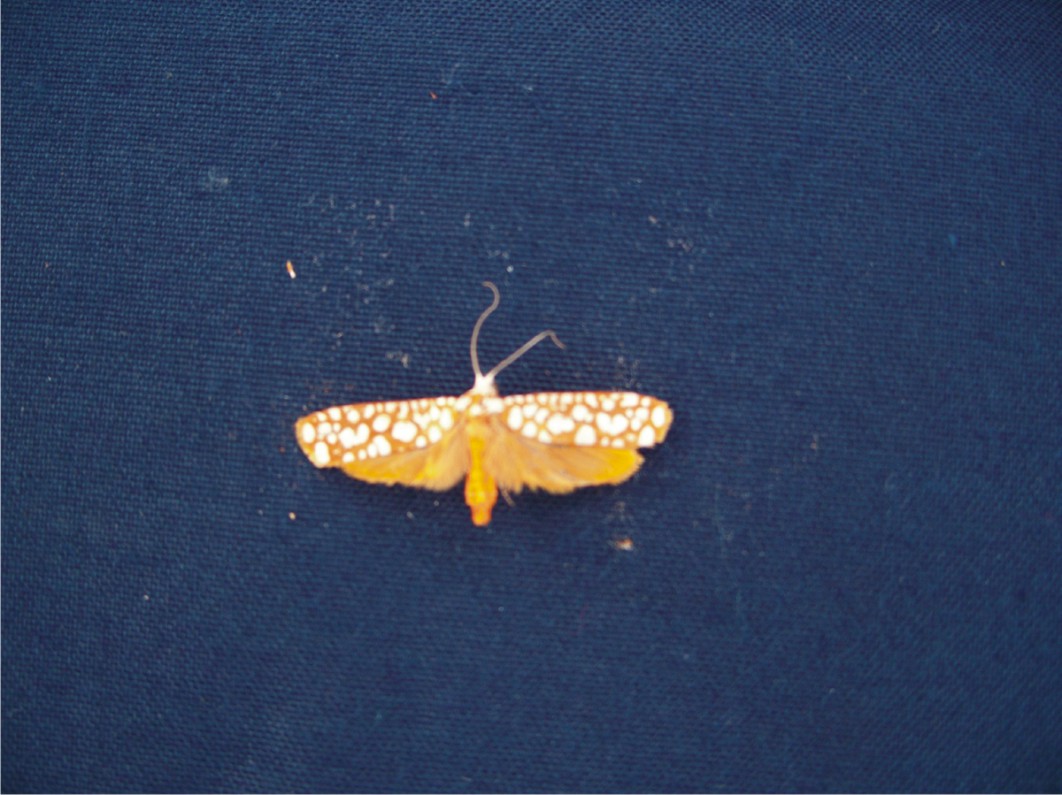
The moths are active and make short
flights when disturbed. They are mostly seen to fly at night and remain
concealed on the under surface of leaves in the day time. The eggs are laid mostly
on the lower side of a leaf particularly on young, tender foliage. The
oviposition period is observed to be 2-14 days. The female lays 46 eggs in two
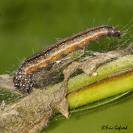
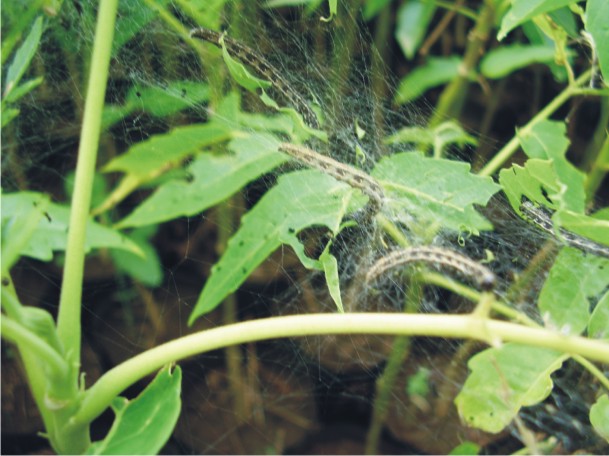
days. The mature larva is about 20 mm long, greenish grey in colour and with
blackish head. The body is striped longitudinally with five dull white lines.
The larval period is from 13-28 days under laboratory condition but under field
situation the period may vary. There are five- six larval instars. The mature
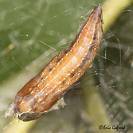
larva constructs a loose cocoon and pupates. Pupa is slender, orange brown to
pale yellowish brown in colour. Depending on the temperature the pupal period
ranges from 4-14 days. In normal condition this pest completes about nine
generations annually. Overlapping generations are also reported.
Damage & Symptoms:
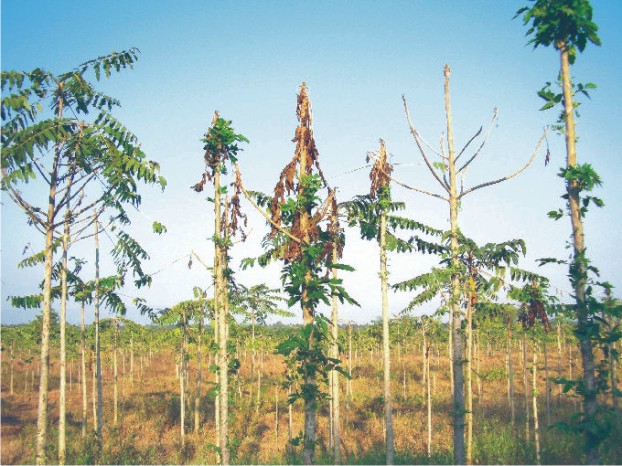
Many larvae web foliage together by
spinning web. Spider web like structure can be seen on top of the terminal
shoot of the seedling in nurseries and young saplings in the plantations. The
larvae remain in groups inside the web, feed on tender leaves, young shoots and
inflorescence resulting in partial or complete destruction of terminal buds and
ultimately the growing tender leaders die. Sometimes, in the absence of enough
leaf material for feeding the larvae browse young tissues of the bark at the
peduncle and cause damage. Webs with hundreds of larvae hanging all along the
completely denuded rachis of young saplings in the plantation are also seen.
Severe epidemics of the pest kill young plantations due to repeated attack.
Control measures:
The pest can be managed by an integration
method of both silvicultural and biological control and with limited use of
chemical insecticides.
Mechanical
In young
plantations larvae along with web can be collected and destroyed. Webbed leaves
containing larvae can also be easily clipped off and destroyed. In grown up
trees the webs containing larvae can be pulled down by winding the silk around
a long stick and destroyed by crushing or dropping in a pan of soap water. In
the process of removal of web the larvae fall on the ground can be collected
and killed.
Botanicals
Use of neem based
products like pure neem oil @ 3% (30ml/litre of water) and neem azal 1% at 30
to 40 ppm (3 to 4 ml/litre of water) were found effective controlling the pest
both in lab as well in field condition.
Chemicals
Foliar spraying of
Monocrotophos (0.05%), Quinalphos (0.05%) and Cypermethrin (0.01%) were also found effective in control of the pest.